
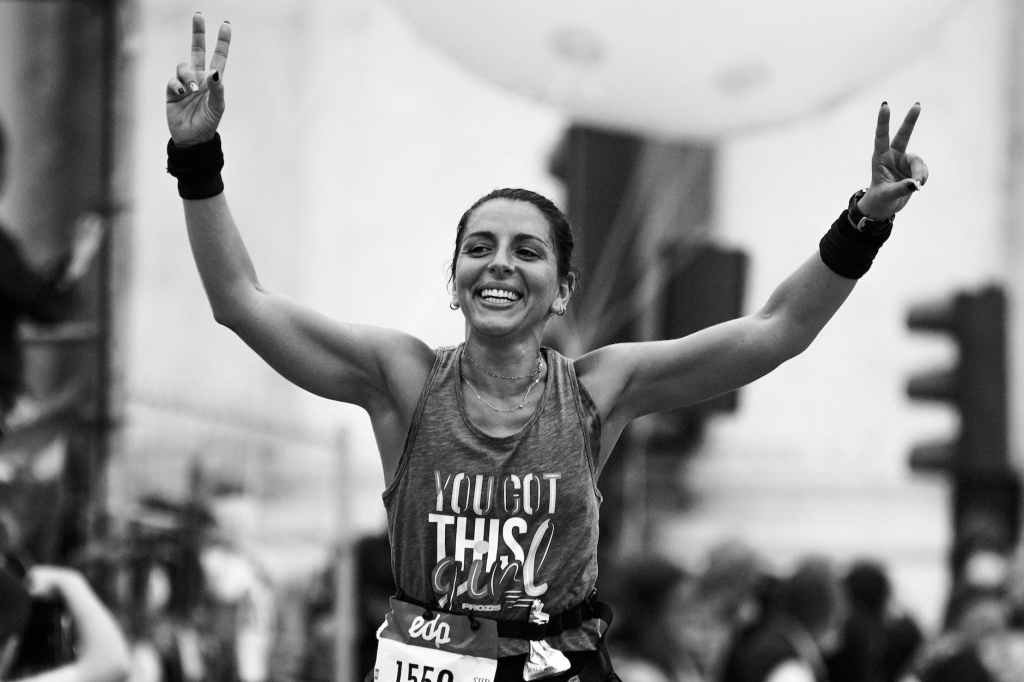
When I owned several restaurants, in our training, I would tell the staff to smile when answering the phone. I explained that the person on the other end would ‘hear’ the smile and be more relaxed when dealing with them. Recent studies have shed light on the fascinating connection between smiling and running, revealing the multifaceted ways in which a positive facial expression can translate into improved performances.
When we smile, our brain releases endorphins, often referred to as “feel-good” hormones, which contribute to an enhanced sense of well-being and reduced perception of pain. This neurological response sets the stage for understanding how smiling can affect running performance.
Eliude Kipchoge, the first man under 2 hours in the marathon, used smiling as part of his attack on the 2 hour barrier in the Ineos 1:59 challenge. During the run, he could be seen smiling often. Many felt that he is just a laid back, happy runner. And, honestly I know a couple of people that know him, and that is true. But, it was part of the carefully planned strategy to help him relax and be more efficient. There are several studies that his team must have looked at and applied to his historical run of 1:59:40 in Vienna.
One study has explored the impact of smiling on running performance and efficiency, offering insights into the underlying physiological reasons. A notable study conducted by Dr. Samuele Marcora and his team at the University of Kent found that a positive facial expression, through deliberate smiling, led to improvement in running endurance. Participants who maintained a smiling expression during a treadmill run reported reduced perceived exertion and were able to run for longer durations compared to those with neutral expressions.
Another research project led by Dr. Noel Brick and his colleagues at Ulster University focused on the effects of smiling on running economy, which refers to the energy expended to maintain a given pace. The study involved recreational runners who were instructed to smile while running at a moderate pace. The results indicated that the smiling group exhibited enhanced running economy compared to the control group. They used less oxygen, ran more economically and had a lower perceived rate of exertion. During this exercise, runners were found to between 2-3% more efficient which translates to five minutes faster for a four hour marathoner and a half a minute faster for the average 5k runner.
The question that naturally arises is: What is the connection between smiling and improved running performance? The answer lies in the intricate interplay between psychological and physiological factors.
- Endorphin Release: As mentioned earlier, smiling triggers the release of endorphins. These natural painkillers not only contribute to a positive mood but also create a sense of euphoria that can help mask feelings of fatigue and discomfort during running.
- Psychological Distraction: Running, especially during intense moments, can be mentally challenging. A genuine smile serves as a psychological distraction, redirecting the focus from the effort being exerted to the act of smiling itself. This diversion can reduce perceived exertion and make the overall experience more enjoyable.
- Biomechanical Changes: Smiling can impact body posture and biomechanics. When we smile, there’s often a subtle upward lift of the chest and shoulders, leading to improved respiratory efficiency. This enhanced breathing pattern can boost oxygen intake and contribute to better endurance.
- Neurological Feedback Loop: The brain constantly processes feedback from the body. A smiling expression may send signals to the brain that convey a sense of positivity and confidence. This, in turn, could influence the brain’s regulation of physical performance, pushing the body to operate more efficiently.
The sources of smiles while running are diverse and personal, yet they all revolve around positive emotions and experiences. Here are a few common factors that can help you smile during a run:
- Beautiful Surroundings: Running in picturesque landscapes, like a serene forest, a trail along a river or along a scenic coastline, can evoke awe and wonder, prompting spontaneous smiles.
- Personal Achievements: Hitting a new personal record, achieving a fitness goal, or simply feeling or thinking about progress in your performance can trigger feelings of accomplishment and elation.
- Social Interaction: Running with friends, training partners, or participating in group events can foster a sense of camaraderie, leading to shared laughter and smiles.
- Mindfulness and Flow: Being in a state of flow, where your focus is completely absorbed in the act of running, can bring about a sense of joy and inner satisfaction.
- Positive Self-Talk: Positive affirmations and self-motivation can lead to a confident and empowered mindset, resulting in a smile as you acknowledge your inner strength.
While the mechanisms underlying this phenomenon are multifaceted, the positive effects of smiling on both mind and body cannot be ignored. So, the next time you hit the pavement, remember that a simple smile might just be the key to unlocking your full running potential. It also makes you look laid back and happy.
Incidentally, this can also apply to many sports and other areas of your life. Joy or even the perception of joy makes everything easier…even housework.
 The Trophy Husband
Leave a comment