
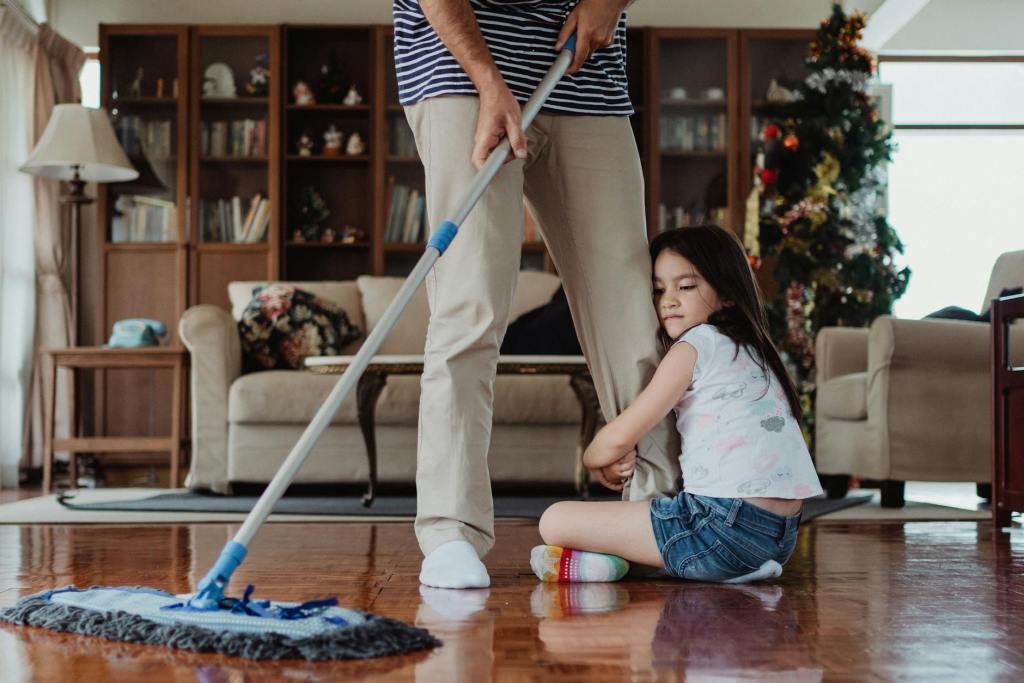
There has been a significant void in my writing to TheTrophyHusband, but I’m back. My wife was deployed as an Army Reserve anesthetist for a 100 day deployment. Luckily it was an in country deployment at Fort Sam Houston in Texas, but she was gone for 111 days. It was an incredible strain on my family and definitely took most of my time for ancillary things such as writing. I was fortunate that I have the time it took to be a single parent for this time, but it was a stressful at times. This time allowed me to appreciate and admire single parents who have to do this at all times. They should be given a trophy…weekly.
When a wife deploys for military service, it creates a significant shift in the dynamics of her household, especially when her male spouse is the primary caretaker of the kids and home. While much has been written about the experiences of military wives left at home, the unique challenges faced by stay-at-home fathers(military husbands) often go unrecognized. These challenges are multifaceted, involving financial strain, emotional upheaval, societal perceptions, and the practical demands of daily life. There is few perspectives on the views of those men in this position.
One of the primary concerns for any household during a spouse’s deployment is financial stability. Military families do receive certain financial benefits during deployments, such as weekly pay and housing allowances, but these may not fully compensate for the additional costs that arise. For soldiers who serve in a reserve role, as my wife, army pay is significantly less than civilian salary. For a stay-at-home dad, the situation can be particularly precarious. In my wife’s case, her place of employment also makes up the difference in salary…for two weeks! She was gone for 16.
The difference between a stay-at-home dad with a deployed wife and a stay-at-home mom with a deployed husband lies in societal perceptions. Traditional gender roles still influence how society views men and women in these situations. Stay-at-home dads often face skepticism or judgment from others. Some may view their role as unconventional or question their masculinity. When their wife is deployed, these perceptions can intensify. A man who is left at home while his wife serves in the military may encounter pity, confusion, or even subtle ridicule. In contrast, a stay-at-home mom with a deployed husband often receives sympathy and understanding.
Economic assumptions also play a role. Stay-at-home dads may face the perception that they should “step up” and find paid employment during their wife’s deployment, even if that is not feasible or in the best interest of the family. The pressure to conform to traditional breadwinner expectations can add to the stress. Even Timothy 5:8 says “ a man who does not provide for members of his household, is worse than an Unbeliever.”
Although we are lucky and had planned for the deployment and were financially sound, this is not the case for many deployed families. Many stay-at-home dads rely heavily on their spouse’s income as the primary source of household support. During deployment, expenses can increase due to the need for additional childcare services, home care assistance, and even counseling services for children struggling with their mother’s absence. In some cases, the emotional stress of deployment can sometimes lead to impulse spending as a coping mechanism.
Unlike traditional stay-at-home moms, who may have a more extensive support network among other mothers, stay-at-home dads often find themselves isolated. Many people feel that because they are a man, they can handle it or will not accept any help. We were lucky to have a few good people help with kid pickup and drop off.
The deployment of a spouse places an enormous burden on the stay-at-home dad’s time and energy. In addition to the usual household duties—cooking, cleaning, and managing the children’s schedules—he must now take on roles that his wife may have previously managed. This could include tasks such as handling finances, laundry, having an extra hand at bedtime, or navigating school-related issues.
The emotional toll of explaining a mother’s absence to young children can be exhausting. Fathers often find themselves acting as both parents, balancing discipline with nurturing care. Young children continuously ask for their mother. The bond between mothers and young children is proven much stronger than that of a father and young child. This makes it easier(for the most part) for a father to be deployed and have less disruption of the family dynamic. So this can be mentally and physically draining for all.
Moreover, there is often little time for self-care. Without the immediate presence of a partner to share responsibilities, many stay-at-home dads experience burnout. Finding moments to recharge becomes a luxury(and sometime and impossibility) rather than a necessity.
Perhaps the most profound impact of a wife’s deployment is the emotional void it creates. Marriage is a partnership built on shared experiences, mutual support, and love. When one partner is deployed, the emotional connection is tested. Stay-at-home dads may feel a deep sense of loneliness and isolation. While technology allows for communication through video calls and messages, it is not a substitute for physical presence. Important moments are missed, and the absence during family milestones can be heartbreaking.
When communicating with his deployed spouse, a stay-at-home dad often finds his ability to express frustration or complain stumped by the knowledge that his wife is the warrior on the front lines. He feels compelled to downplay his challenges out of respect for her dangerous and demanding role. This dynamic contrasts sharply with traditional scenarios where the man is deployed. In such cases, a wife left at home might feel more free to voice her frustrations about the overwhelming responsibilities of single parenting. There is a sense that the man has abandoned her and is having a good time away from the family.
This dynamic can lead to emotional suppression, further exacerbating feelings of isolation. The stay-at-home dad must navigate the delicate balance of providing emotional support to his deployed spouse while managing his own mental and emotional health.
The emasculation of a man with a deployed wife is a real and often unspoken issue. Society has long positioned men as protectors and providers. When the wife becomes the one serving on the front lines, the man’s traditional role is inverted, leading to feelings of inadequacy and societal judgment. This reversal can be deeply challenging for stay-at-home dads, who must reconcile their love and pride for their spouse’s service with the stigma of being perceived as less manly.
Social norms further isolate stay-at-home dads. Support groups and community events for military families are often geared toward women, making it harder for men to find camaraderie and understanding. This lack of tailored resources can lead to feelings of exclusion.
Society must also evolve to recognize and support the diverse roles men play in their families, especially within military households. By acknowledging the contributions and challenges of stay-at-home dads with deployed spouses, we can create a more inclusive and understanding community for all military families.
Resources for husbands with deployed wives.
As a stay-at-home husband with a spouse deployed in the military, you have access to various support systems and programs designed to assist military spouses during deployment. Here are some resources that can provide guidance, community, and assistance:
Here some support systems and programs with links for stay-at-home husbands with deployed spouses or vice/versa:
- American Legion Auxiliary (ALA) – Provides resources and assistance for military families.
- Military OneSource – Free confidential counseling, financial advice, and deployment support.
- National Military Family Association (NMFA) – Offers advocacy, spouse scholarships, and deployment support.
- Operation Homefront – Provides emergency financial and housing assistance for military families.
- Military Spouse Advocacy Network – Online support community for military spouses.
- Blue Star Families – Programs to support military families with networking, events, and local support.
- Online communities, your local churches, and local military support groups are a great source of help too.
If you’re near a military base, you can also check their Family Readiness Group (FRG) or Morale, Welfare, and Recreation (MWR) programs for additional support.
 The Trophy Husband
Leave a comment